

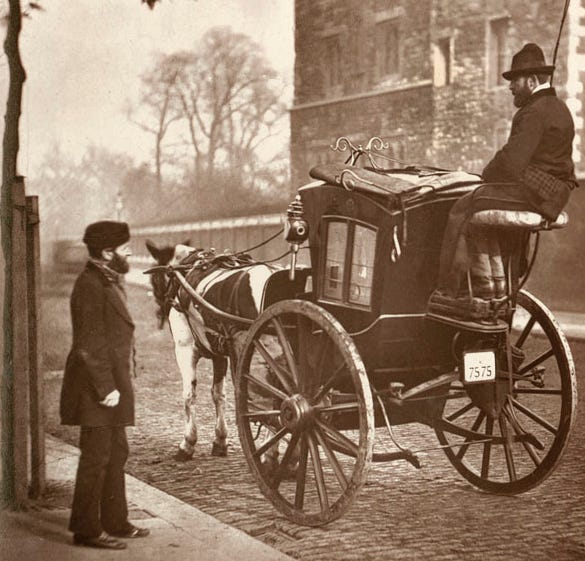
On 26 February 1889, businessman John Fletcher was found dead in a hansom cab in Manchester. He had been travelling with a young male companion, who had vanished when the cab stopped in traffic. When it was discovered that the victim had been poisoned with chloral hydrate, Detective Chief Inspector Jerome Caminada was tasked with the investigation into this suspicious, and puzzling, death. He succeeded in identifying, tracking down and bringing the perpetrator to justice within just three weeks, which earned him the nickname of ‘Manchester’s Sherlock Holmes.’
I’ve written about this fascinating case many times, and you can read a summary on an earlier post. However, I was still intrigued about how Detective Caminada achieved this extraordinary feat, and so I returned to the archives, and reread Caminada’s memoirs, to find out exactly how he managed to secure a conviction in such a short time and to assess whether he had played by the rules.
Initially, the only information that Detective Caminada had to go on was a description of the young man who had absconded from the cab. The key eyewitness was PC William Jakeman, who had been standing by the steps of Manchester Cathedral, when he saw John Fletcher and his companion step into the cab. According to his recollection, the young man was wearing a black felt pot hat (a hat with a low, stiff crown) and dark brown clothing. He was not wearing an overcoat. Also, local fish stall holder Edward Lait, who knew the victim well, had seen him just a few minutes before he got into the cab, having a conversation with the unknown man. He told the police that he had been wearing light check clothing.

After they got into the cab, the two men drove to the Three Arrows public house in Deansgate, where they stayed for about twenty minutes to have a drink. Several witnesses saw them. in the pub, but were unable to add further details about the suspect. As Detective Caminada said, in his memoirs, it was ‘Certainly not much of a clue to work upon!’
The chief inspector began by making inquiries in the market place on Victoria Street, where the two men had been seen together before they alighted the cab (near Edward Lait’s fish stall) but, although several passersby had spotted them, they could not describe the suspect. However, Caminada managed to find an individual who had been watching as the younger man leapt from the cab, but he could only tell the police officer which direction he had fled in. Despite this lack of information, the detective discovered that a man wearing similar clothes had visited the York Minster beerhouse that same evening and, most crucially, he had been carrying a gold watch (John Fletcher’s gold watch was missing).
Further inquiries revealed that the unknown man with the watch had later taken a cab from the beerhouse to the Locomotive Inn. The driver described the watch which corresponded with the victim’s. As Detective Caminada was well aware that the Locomotive Inn was ‘a noted house for pugilists’, he went there next, but he couldn’t elicit any further information. His investigation was at a dead end.
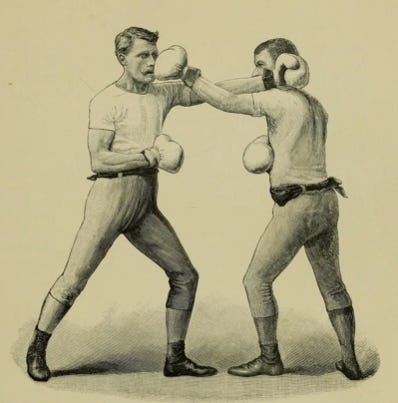
Caminada knew that his trail had come to a halt, and that he would have to rely on his ‘own judgment’. And it was at this point in the investigation that he made the link between the case and a member of the ‘pugilistic fraternity’, finally singling out Charles Parton, son of an innkeeper in Greengate, Salford who organised illegal fights, as his prime suspect. Furthermore, his father was known for drugging the opponents by putting a substance in their mouth wash, to rig the betting.
The more I thought of the matter, the more I felt convinced that I was on the right track and at length I determined to arrest him.
Shortly after, Detective Caminada tracked Charlie Parton down to his parents’ house, where he arrested him in his bed on 2 March, just four days after John Fletcher had died. He took him straight to the detective office at the town hall and organised an identity parade. It’s interesting to note that Caminada asked Parton if he was satisfied with the set-up before he proceeded, which aligns with official guidance.
Although Caminada stated in his memoirs that he placed Parton in a line-up with seven others, accounts vary and those who participated in the parade, as witnesses, described there having been more – somewhere between nine and fifteen. The detective brought several individuals to the town hall to identify his suspect, including PC William Jakeman, who had seen the two men get into the cab, and the cab driver, Henry Goulding. They both made a positive identification, and a number of others, who were either serving or drinking in the Three Arrows pub the day, also picked him out. Everyone stated that they had recognised Parton by his features and not by his clothing.
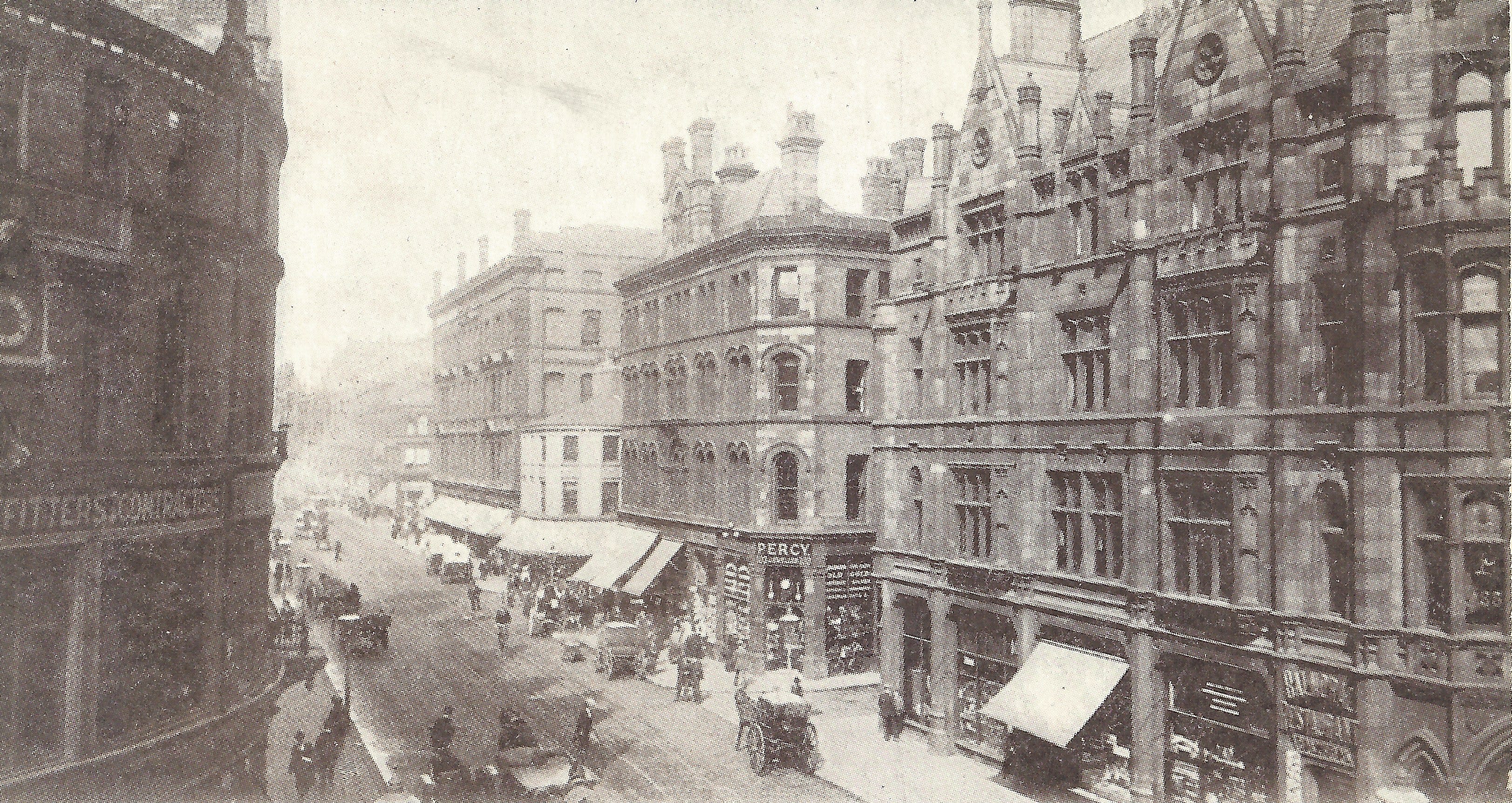
Sure of his culprit, Jerome Caminada set about finding other evidence to build the case against him, which included linking Parton with the theft of some chloral hydrate from a chemist in his home city of Liverpool, and two previous incidents in Manchester, in which other possible victims were apparently drugged and robbed of their possessions – they also identified Charles Parton in a line-up. And finally, between Parton’s committal and his trial, Caminada produced another witness who had seen the suspect pouring some liquid from a phial into John Fletcher’s beer. This extraordinary testimony sealed the conviction.
Looking back now over the evidence, it would seem that once Detective Caminada had decided who his prime suspect was, he used all his investigative skills to bring him to justice. However, his sleuthing activities were mostly based on the traditional strategies of acquiring information and locating witnesses. Some clear chains of evidence run through his investigation, such as Parton having been seen with the gold watch, his connections to chloral hydrate, and his possible previous behaviour in using drugs for the purposes of robbery. However, there are some inconsistencies in the evidence.
In his memoirs, Caminada claimed that all the witnesses had identified Parton at the line-up and yet, close reading of the formal depositions reveal that some of them, including the landlady of the Three Arrows public house, attested under oath at the trial that they did not recognise the suspect in court. The identity parade was very hastily put together, and the witness statements seem almost rehearsed. Also, some of the testimonies contained far less detail about the suspect’s appearance than was recounted by the detective, who seems to have embellished the details of his investigation in his memoirs.
This is a curious case, the successful outcome of which seems to have relied almost entirely on witness testimonies and circumstantial evidence. In summing it up, Detective Caminada concluded that ‘truth is stranger than fiction’ - in the Manchester Cab Mystery, it’s certainly hard to know where the line between truth and fiction lies.
You can read Detective Caminada’s account of this extraordinary case in The Adventures of Detective Caminada.
Although he was found guilty of the murder of John Fletcher, Charles Parton always advocated that he was innocent. You can find out about his rather unique and compelling story in an earlier post.
What a fabulous name he has too! Sounds like a proper fictional Victorian detective..:-)