


Warning: description of violence
When I was studying homicide cases for my PhD, I never knew what I would come across in the boxes of trial records at the National Archives. It was such a thrill to skim a case and uncover a crime which had been long forgotten and, most importantly for me, it revealed evidence of how the Victorian and Edwardian police detectives tackled homicide investigations. One significant discovery was the murder of bookseller Edward Moyse, in Liverpool in 1895, which was a shocking crime with one key eyewitness – a young lad who was also an intended victim of the killer.
Fifteen-year-old John Needham worked as an assistant to Edward Moyse, aged 52, who sold secondhand books on a stall at George’s Dock, Liverpool. Young John had started his employment at the house on Red Cross Street, where he lived, earlier that month on 3 February, after his father had seen an advert in the local newspaper for ‘a boy’ to help out with the business. His duties were to work on the stall and to do the housework.
A fortnight later, on the evening of 18 February, John was alone at the house when a stranger came to the door. He introduced himself as William Miller and told the lad that he had come to buy some books. When John said that his employer was not in, the man replied that he would come back later, which he did, at about 8 pm. However, Edward Moyse had still not returned by this time, so Miller sat down in the kitchen to wait. While he was sitting there, he tried to engage John in conversation, asking him about his work, and talking about the bookseller and, in particular, his money.
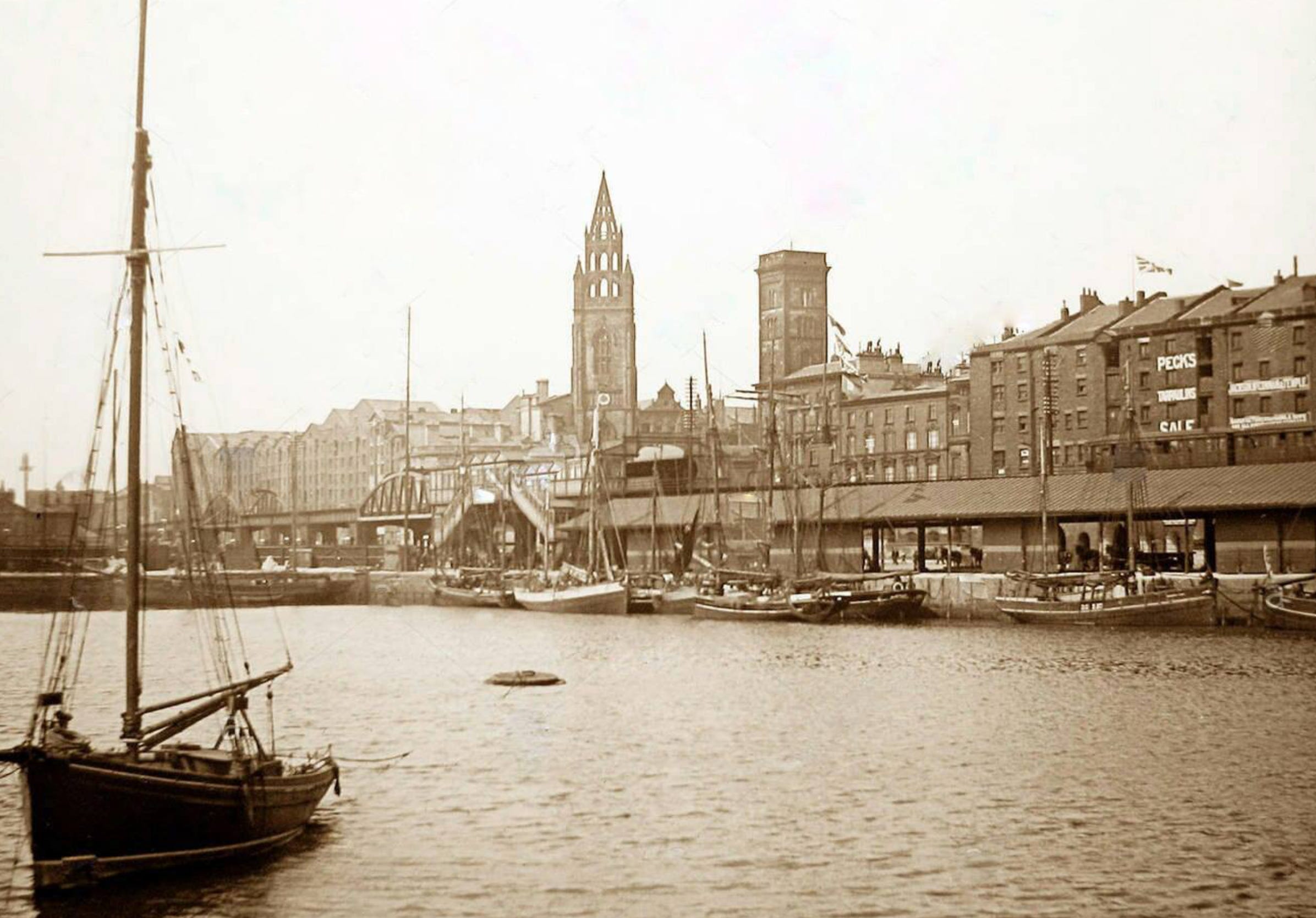
When Edward finally arrived home, almost two hours later, he shook hands with William, saying, ‘I never expected you here so soon.’ He then mentioned to John that the visitor had been his lodger. Offering Miller a bed for the night, he asked the boy to make up one of the bedrooms for their guest. John left the two men chatting in the kitchen and went to bed.
At about 5 am the following morning, John was woken by the church bells. A minute later, William came into his room, and complained that there was no coal to make the fire and he couldn’t rouse Edward. John told him where to fetch the coal, which he did. After William had made the fire, he asked John about an entrance hole into the loft. He then got a chair and climbed up into the attic to have a rummage around. John left him to it and returned to his bedroom. About ten minutes later, William followed the boy into his room, he blew out the candle, and began to attack him:
[he] struck me on the head somewhere but I don’t know what with. I bled and screamed. He then caught me by the throat with his hands and choked me and left me on the bed.
John lost consciousness and later woke up in the kitchen, at which point William started attacking him again – he hit him on the head with a poker and a hatchet, threw him to the ground and placed his foot on the child’s chest. When John tried to grab his trousers, his assailant kicked him. Eventually William left the house but not before threatening John that he would come back and kill him.
After William had left, and despite his injuries, the boy went into Edward’s bedroom and found him lying on his bed with ‘his head cut.’ John ran into the street for help and the dock gateman, who was on his way to work, called for the police, who took the child to the hospital.
John’s injuries were quite horrific – he had 15 wounds to the head, six of which had penetrated to his skull, which had been fractured in three places. There was one above each eye and another at the back of his head. He had also sustained wounds to his hands, face, shoulder and back. The house surgeon at the Northern Hospital described his state on admission:
He was suffering from shock and loss of blood and seemed to be in a terrified condition when any one touched him.
Miraculously, John survived and was soon recovered enough to give evidence to the police, and to later identify his attacker and testify in court. His employer, Edward Moyse, was not so lucky. He did not survive and his body was taken to the dock mortuary for the post-mortem examination. He too had suffered significant head injuries, and his skull had been ‘extensively fractured’, which had bruised his brain and caused his death.
Several police officers had arrived at 26 Red Cross Street shortly after the alarm was raised. They had found the poker on the kitchen table and a hatchet on Edward’s bed, which had both been used in the fatal attack. There was blood everywhere, especially in the bookseller’s bedroom – it had dripped through the mattress on the bed onto the floor. Interestingly, PC Hugh Davies found a purse containing £8 in cash under the pillow, which presumably had been the motive for the murder, even though it was still there.
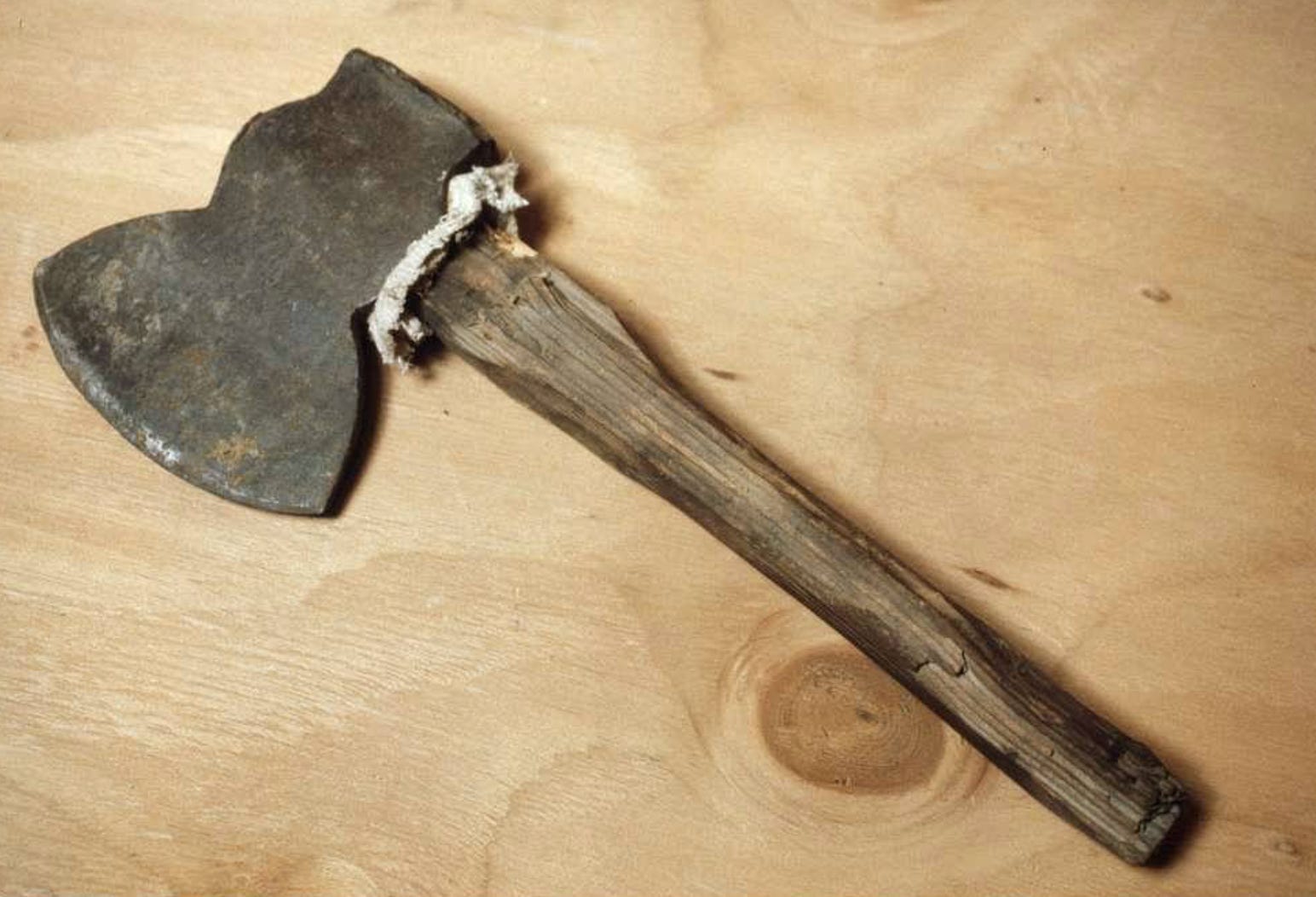
In the meantime, William Miller had gone to ground. As was often the case in Victorian murder investigations, he was located due to information received at the detective office, given by a woman who had recognised him as he left the crime scene. She told them that he was at his parents-in-law’s house, where the police arrested him while he was asleep in bed. They found a large quantity of bloodstained clothing in his room, which they sent away for chemical analysis. Miller was identified by John (from his hospital bed) as his attacker, which completed the evidence for the case against him.
On 15 May 1895, William Miller, aged 27, was tried at the Liverpool Assizes for the murder of Edward Moyse and the attempted murder of John Needham. In a statement, read out in court, he refuted the evidence of many of the witnesses and claimed that, on the night in question, he had been helping a gentleman carry his luggage near the railway station, which had been witnessed by people in a queue for the tram near St George’s Hall. After that, he had visited the Cocoa Rooms for a drink and then a public house, which he’d forgotten to mention when the detectives had questioned him on his arrest, due to ‘confusion of mind.’ His claims of innocence were to no avail, and he was convicted and sentenced to death.
William Miller was executed by hangman James Billington at Walton Prison on 4 June 1895. As executions were private at this time, the act was only witnessed by prison officials. The black flag was hoisted at 8.04 am to signal his death. According to the Manchester Courier, ‘it was performed in a skilful manner, and without any hitch.’ The convicted man made no confession.
Later this week in The Confidential Files, I’ll be sharing more details about this case in relation to the detective investigation which is fascinating, as it combines several different strategies, including quite advanced crime scene examination, blood analysis and a very unorthodox identity parade. I’ll also be revealing some surviving evidence of the case, such as the original sketches of the crime scene.
Next time in The Detective’s Notebook, I’ll be delving further into the history of Victorian and Edwardian detectives through some of the objects they used in their homicide investigations.